Introduction
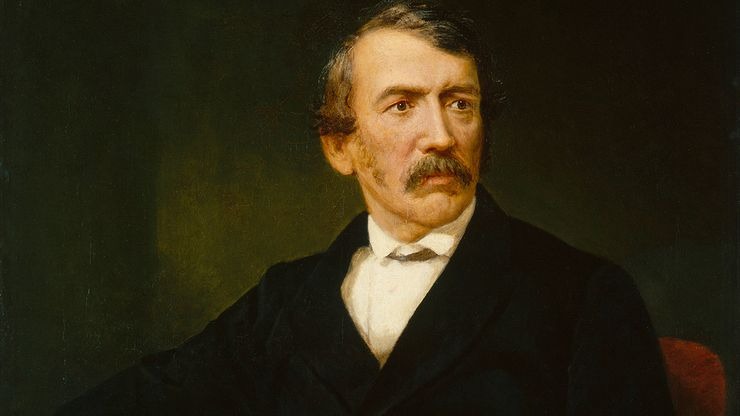
It’s likely that you’ve heard of David Livingstone | Hero of Faith before, either in a class or in an African documentary. However, who was he, and why is he still significant today? There was more to David Livingstone than exploration. His exploits in Africa enthralled the globe, and he was a missionary, physician, and fervent opponent of slavery. Let’s examine his remarkable life and accomplishments.
Early Life and Background
Scottish physician David Livingstone (19 March 1813 – 1 May 1873) was a pioneering Christian missionary with the London Missionary Society, a Congregationalist, and an explorer in Africa. Mary Moffat Livingstone, a member of the well-known Moffat missionary family of the 18th century, was Livingstone’s wife. A Protestant missionary martyr, a working-class “rags-to-riches” hero, a scientific researcher and explorer, an imperial reformer, an anti-slavery activist, and a supporter of British colonial and economic growth, Livingstone became a legendary figure. He consequently rose to prominence as one of the most well-liked British heroes of the Victorian era in the late 19th century.
Livingstone’s renown as an explorer and his infatuation with discovering the origins of the Nile stemmed from his conviction that, if he could unravel that ancient enigma, his notoriety would enable him to put an end to the Arab-Swahili slave trade in East Africa. “The Nile sources are only useful for opening my mouth with power among men,” he said to a buddy. I’m hoping to use this power to make amends for a great evil. The classic era of European geographical discovery and colonial penetration of Africa culminated in his following exploration of the central African watershed. During the European “Scramble for Africa,” when nearly all of Africa was ruled by Europeans for decades, a number of significant central African Christian missionary endeavors were established as a result of his missionary travels, “disappearance,” and eventual death in Africa. He was then hailed as a posthumous national hero in 1874. resulted in the beginning of several significant central African Christian missionary projects carried forward in the period of the European “Scramble for Africa,” during which practically all of Africa came under European control for decades.
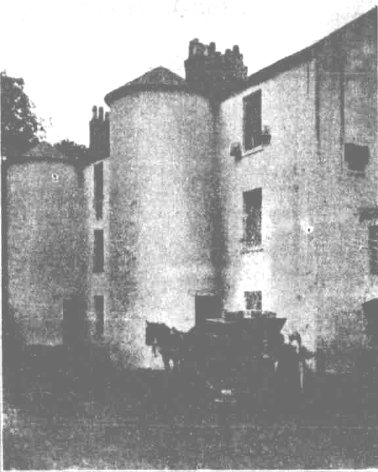
Livingstone was born on 19 March 1813 in the mill town of Blantyre, Scotland, in a tenement building for the workers of a cotton factory on the banks of the River Clyde under the bridge crossing into Bothwell. Born second of seven children to Neil Livingstone and his wife Agnes, he David Livingstone | Hero Of Faith .
David worked in Blantyre Works at the age of 10 in the cotton mill owned by Henry Monteith & Co. Working fourteen hours as piecers, he and his brother John tied broken cotton threads on the spinning machines.
Traveling as a a door-to-door tea salesperson, Neil Livingstone was a Sunday school instructor and teetotaller who distributed Christian tracts. He read books on travel, theology, and missionary activity rather intensively. This translated for the young David, who developed into a passionate reader, but he also enjoyed searching the local limestone quarries for geological, plant, and animal specimens. Neil tried to get his son to study only theology, fearing that science books were weakening Christianity; but David’s great passion for nature and science drove him to look at the interaction between religion and science. David Livingstone missionary Apart from the Bible, this book was maybe his most important philosophical impact when he read Thomas Dick’s Philosophy of a Future State in 1832 and discovered the justification he needed to balance faith and science.
Early in life, other major influencers were David Hogg, his Sunday school teacher, and Blantyre preacher Thomas Burke. David left the Church of Scotland for a local Congregational church at the age of fifteen, inspired by speakers like Ralph Wardlaw, who rejected predestinational restrictions on redemption. Inspired by American revivalistic ideas, Livingstone totally embraced Charles Finney’s theory, Professor of Theology at Oberlin College, Ohio, that “the Holy Spirit is open to all who ask it.” For Livingstone, this meant a respite from his constant guilt over eternal damnation. Livingstone convinced his father that medical education could serve Christian goals by reading the Appeal to the Churches of Britain and America on behalf of China.
From ages 10 to 26, Livingstone’s experiences in H. Monteith’s Blantyre cotton mill were also significant, first as a piecer and then as a spinner. Lines he used to hum from the egalitarian Robert Burns song, “When man to man, the world o’er/Shall brothers be for a’ that,” taught him persistence, endurance, and a natural empathy with all who labor David Livingstone | Hero Of Faith necessary monotonous work for the support of his poor family.
Education
Along with a few other mill children with the endurance to do so despite their 14-hour shift, Livingstone attended Blantyre village school. Having a family committed to lifelong learning strengthened his education.
At twenty-one, he was intrigued by a brochure his father received from the church environment outlining Gützlaff’s appeal for missionaries to China, with the fresh idea that medical physicians should be trained. Like many other Scottish students, Livingstone was to support himself, with the consent of the mill management, by working at his previous job from Easter to October, outwith term time. His father was convinced. Attaching theology lectures by the anti-slavery campaigner Richard Wardlaw at the Congregational Church College, where he may possibly have studied Greek, he joined Anderson’s University, Glasgow, in 1836, studying medicine and chemistry. He was trained by a local Roman Catholic man, Daniel Gallagher (later a priest, founder of St Simon’s, Partick), and needed some knowledge of Latin to be accepted into medical college. Livingstone established longtime friends like Andrew Buchanan and James Young, studied hard, developed a strong basis in science and medicine, and
Unlike others, the London Missionary Society (LMS) was at the time the main institution in the nation for missionary activity and was available to Congregationalists. He applied to the LMS in October 1837, and in January was sent questions he answered. He did not get a response until August 1838 when he was asked to two interviews. Rather than the more basic route for an artisan missionary, he was then approved as a probationary candidate and given beginning training at Ongar, Essex, as the introduction to studies to become a minister within the Congregational Union operating under the LMS. From the Reverend Richard Cecil, who in January 1839 assessed that Livingstone had “sense and quiet vigor,” good temper and substantial character “so I do not like the thought of him being rejected.” He and six other students paid tuition in Greek, Latin, Hebrew, and theology. One month later he still considered Livingstone “hardly ready” to begin theological studies at Cheshunt College, and “worthy but remote from brilliant”. The LMS board approved Livingstone in June 1839, agreed to his want to continue his education with Cecil at Ongar until the end of the year, then approved LMS financing for medical studies in London.
Continuing his medical education at the Charing Cross Hospital Medical School, he studied medical practice, midwifery, and botany in order to obtain required clinical experience. On November 16, 1840, he qualified as a licentiate of the Glasgow Faculty (now Royal College) of Physicians and Surgeons. He was subsequently named an Honorary Fellow of the Faculty in 1857. Along with another missionary to South Africa, William Ross, in a service at the Albion Chapel, Finsbury, Livingstone was ordained a minister of the church on November 20, 1840. Cecil and J. J. Freeman conducted the ordination service.David Livingstone | Hero Of Faith.
Vision for Africa
Livingstone had replied to Gutzlaff’s appeal for missionaries to China, but the approaching First Opium War made the LMS directors wary about deploying candidates there. Cecil explained to him of their hope that he should be engaged in the West Indies “in preference to South Africa” when he wanted to extend his probationary training at Ongar. He had always been drawn to other regions of the globe rather than a stable pastorate; on 2 July 1839 he wrote to the LMS directors that the West Indies was by then well served by doctors. He kept theological tuition from Cecil under LMS agreement until the end of the year, then returned to medical school.
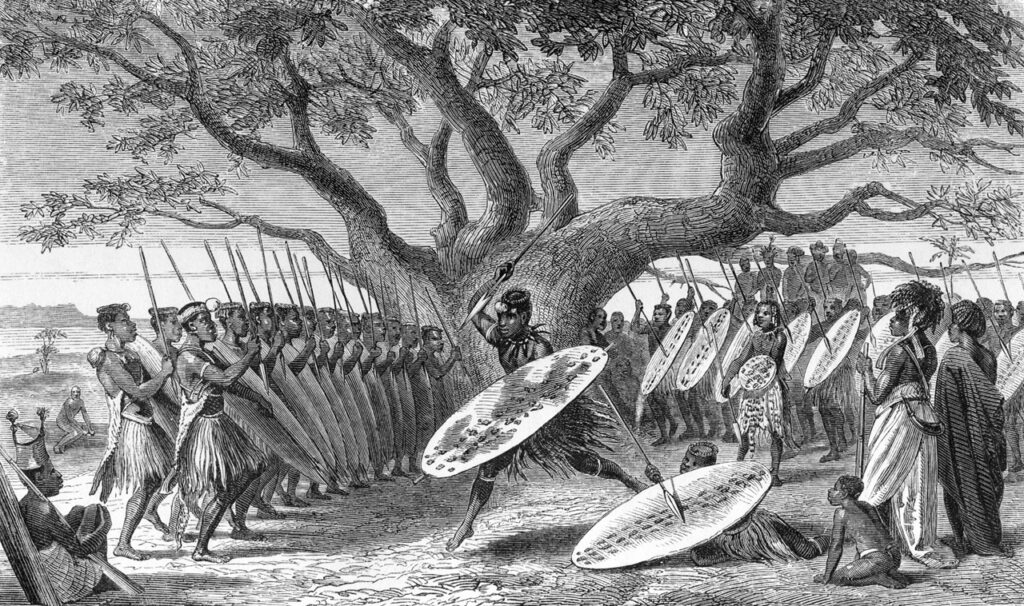
David Livingstone | Hero Of Faith He returned to Mrs. Sewell’s missionary boarding home in Aldersgate, where he had been earlier in London, on starting his clinical training in January 1840. The missionary Robert Moffat, then in England with his family to publicise the work of his LMS mission in Kuruman in South Africa, paid periodic visits to others staying there. Livingstone queried him often about Africa, and as Moffat subsequently said; “By and by he asked me whether I thought he would do for Africa. Specifying the great plain to the north, where I had occasionally seen, in the morning sun, the smoke of a thousand towns, where no missionary had ever visited, I said I thought he would, if he would not go to an old station, but would advance to empty country.”
The image of Moffat’s extending missionary activity to the north of Bechuanaland and the passionately contested issue of Christianity and business delighted him.David Livingstone | Hero Of Faith Following conversations with the abolitionist Fowell Buxton, the LMS missionary John Philip wrote Researches in South Africa in 1828 suggesting that Christianity will always bring “civilization” including free trade and free labour. Livingstone’s case was strengthened for him when he attended the Exeter Hall meeting on June 1, 1840, where Buxton convincingly argued that, should chiefs instead acquire desired European goods through “legitimate trade,” the African slave trade would be discontinued rather than sold. The impact of Christian missions preaching the gospel and implementing school education would thus be enhanced.
Missionary work in Africa
Along with two other LMS missionaries, Ross, who had been ordained at the same service as Livingstone, and Ross’s wife, he departed London on November 17, 1840, passenger on a sailing brig headed for the Cape of Good Hope. The skipper provided him thorough navigation instruction and he studied Dutch and the Tswana languages during the protracted journey. Unlike the other two, he walked ashore at Rio de Janeiro and was struck by the cathedral and surroundings, but not by the intoxication of British and American sailors; so, he distributed them tracts in a dockside bar. The ship reached Simon’s Bay on March 15, 1841; for a month as it emptied and loaded, the three stayed at Cape Town with Mr and Mrs Philip. Philip, local director of the LMS, had maintained their philosophy that all people were equal before God and in law, which had resulted in conflicts with Boers and with British colonists as Philip believed Xhosa people were not to blame for the Xhosa Wars over enlarging the Cape Colony. While others like Moffatt sought more emphasis on new places, missionary factions fought over this and over his concentration on missionary activity among Griqua people of the colony. Tensions also existed between ordained missionaries and artisan missionaries engaged in lay expertise.
From 19 May to 31 July, the ship carried Livingstone and the Rosses to Algoa Bay; they were then on a protracted journey by ox-cart to the Kuruman Mission. He absorbed Tswana life while the Moffats were still not back from Britain. Trekking 750 miles (1,210 km) with the artisan missionary Roger Edwards, who had been at Kuruman since 1830 and had been advised by Moffat to look at possible locations for a new station, September to late December They went and talked about the Mabotsa, Botswana, area close to Zeerust, North West Province, South Africa.
Livingstone set out two expeditions with African friends; the principals were deacon Paul and Mebalwe, a mission worker. Edwards received LMS permission in June 1843 to open a mission station at Mabotsa with his wife. Livingstone agreed to live there and helped them physically to construct buildings. Saying he would be happy to name Mabotsa “the centre of the sphere of my labours”, he wrote to tell LMS secretary Arthur Tidman he would attempt to hold himself “in ready to go anywhere, provided it be forward”.
Arriving to the Vaal River in January 1844, the Moffats were joined by two fresh missionary families. Riding out to meet them there, Livingstone sat in the Moffats’ ox-cart chatting with Robert for hours during the seventeen or eighteen days it would take to return home to Kuruman. He met their daughter Mary, who had been born and raised in Africa, for the first time.
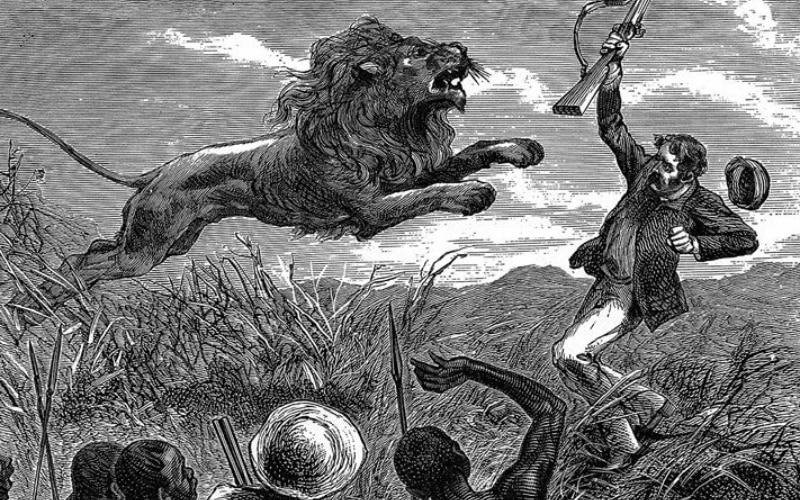
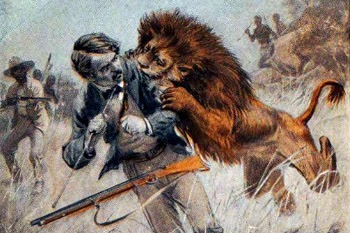
Deacon Mebalwe’s firing distracted the lion that had outpaced Livingstone.David Livingstone | Hero Of Faith
Scottish Livingstone Memorial Sculpture in Blantyre
Lions frequently attacked the Mabotsa people’s herds, and on February 16 Mebalwe and Livingstone joined them in defending livestock. Livingstone got a clear view of a big lion, but when re-loading it struck, breaking his left arm and drove him to the ground. Mebalwe’s life was spared by his diverted focus on trying to photograph the lion. He was also bitten. A man attempting spearing it was attacked moments before it dropped dead.
Livingstone’s fractured bone fused tightly, even if his set by himself and Edwards was not perfect. David Livingstone | Hero Of Faith He went for recovery in Kuruman, where Mary, Moffat’s daughter, took care of him and they grew close. Though it stayed a cause of great anguish for the rest of his life, his arm recovered allowing him to shoot and lift large weights; he was not able to raise the arm higher than his shoulder.
On January 9, 1845 Mary and Livingstone were married.
Livingstone was had to quit his first mission in Mabotsa in Botswana in 1845 after irreconcilable disputes formed between him and his fellow missionary, Rogers Edwards, and because the Bakgatla were proving indifferent to the Gospel. Drought and the proximity of the Boers drove him to abandon Chonuane, his second mission, in 1847; he also wanted “to move on to the regions beyond”. After two years of gentle persuasion, Kolobeng Mission Livingstone converted Chief Sechele in 1849. Sechele slipped just a few months later.
Exploration of southern and central Africa
To improve his Tswana language skills and find locations to set up mission stations, Livingstone made journeys far to the north of Kolobeng with William Cotton Oswell. They emerged from the Kalahari Desert in 1849 and arrived at Lake Ngami. The Royal Geographical Society awarded him a chronometer watch for “his journey to the great lake of Ngami” in 1850. In August 1851 they arrived at the Zambezi, which he hoped would be a “key to the Interior”. He had heard of a river perhaps becoming a “Highway” to the coast. After sending his family to Britain, Livingstone travelled north to the village of Linyanti on the Zambezi river, roughly halfway between the east and west coast of the continent, where Sekeletu, chief of the Kololo, granted Livingstone authority as a nduna to lead a combined investigation of trade routes to the coast, with 27 Kololo warriors acting as interpreters and guide. Following great hardships and Livingstone’s near-death from fever, they arrived in the Portuguese port of Luanda on the Atlantic in May 1854 Livingstone retraced the path back to Linyanti as he knew it would be too tough for next traders. Then he traveled east down the Zambezi with 114 Kololo men, loaned by the same chief. On this trip he became the first European to visit the Mosi-oa-Tunya (“the smoke that thunders”) waterfall, naming Victoria Falls after Queen Victoria. Having charted most of the Zambezi river, he finally made it successfully to Quelimane on the Indian Ocean.
Livingstone became well-known as the first European to cross south-central Africa at that latitude, acclaimed as having “opened up” Africa, yet trade channels previously existed in a long-standing trans-regional capacity. From both sides, Portuguese traders had reached the middle of the continent; two Arab traders crossed from Zanzibar to Benguela in 1853–1854; in 1800 two native traders crossed from Angola to Mozambique.
Livingstone promoted the founding of commerce and religious missions in central Africa, but his main objective became elimination of the African slave trade as executed by the Arab Swahili of Kilwa and the Portuguese of Tete. Now etched on his monument at Victoria Falls, his motto was “Christianity, Commerce and Civilization,” a mix he thought would offer a substitute for the slave trade and give dignity to the Africans in the view of Europeans. He thought that the crossing of the Zambezi as a Christian commercial corridor into the interior would be the key to reaching these objectives.
Author and activist writer and campaigner, David Livingstone | Hero Of Faith
December 1856 brought him back to Britain. For his travels across Africa, the Royal Geographical Society bestowed upon him its Patron’s Medal in 1855. Inspired by the London Missionary Society, he kept a notebook but unusually had John Murray print his Missionary Travels in 1857, a best-selling travelogue. The book includes compassionate portrayals of African people and field scientists. He suggested that slave trading would stop with missionaries and “legitimate commerce” along river into central Africa.
The reaction in Britain on his discoveries and backing for next missions inspired Livingstone. More so than for purely missionary activity, he suggested doing more research, mostly to establish paths for commercial trade which he felt would displace avenues for slave trade. Livingstone received a letter from the London Missionary Society (LMS) on learning of his plans congratulating him on his travel but stating the directors were “restricted in their power of aiding plans connected only remotely with the spread of the Gospel”. Not enough was this sharp refusal for new mission sites north of the Zambezi or his larger objective of opening the interior for trade across the Zambezi to cause him to immediately resign from the LMS. Livingstone responded nothing to the LMS directors when Roderick Murchison, head of the Royal Geographical Society, contacted the foreign secretary.David Livingstone | Hero Of Faith Even if his command of a government expedition to the Zambezi seemed increasingly likely to be sponsored by the exchequer, “I am not yet fairly on with the Government,” he advised a friend, “but am nearly quite quite off with the Society (LMS).” Livingstone left the London Missionary Society in 1857, and in May of that year he was named as her majesty’s consul with a roving mandate, covering Mozambique to the western provinces. His sphere of authority was specified in February 1858 as “the Eastern Coast of Africa and the independent districts in the interior”.
Livingstone had encouraged, the LMS believed he would return to Africa with their mission to the Kololo in Barotseland, while he negotiated with the government for his new post as consul. Eventually, that mission suffered deaths from malaria of a missionary, his wife, a second missionary’s wife, and three children. Livingstone had suffered over thirty attacks on his previous trip, but he had minimized his suffering and inflated the quality of the land they would discover; the missionaries headed for the swampy area with absolutely insufficient quinine supplies. According to biographer Tim Jeal, this episode was a major Livingstone failing and a sign of his tendency to put his profession and ambitions above the life of people close to him.
David Livingstone | Hero Of FaithLivingstone was now a public speaker’s much sought-after fame who had been elected to the Royal Society. His ideas attracted public support, and he gathered money for his second trip by public subscription in addition to £5,000 from the government to look into British trade possibilities via the Zambezi.
Life of David Livingstone Zambezi expedition
In December 1857 the Foreign Office proposed a huge expedition. Livingstone had intended another solo trip with African assistants, and in January 1858 he agreed to head a second Zambezi expedition with six expert officers, quickly hired in the UK.
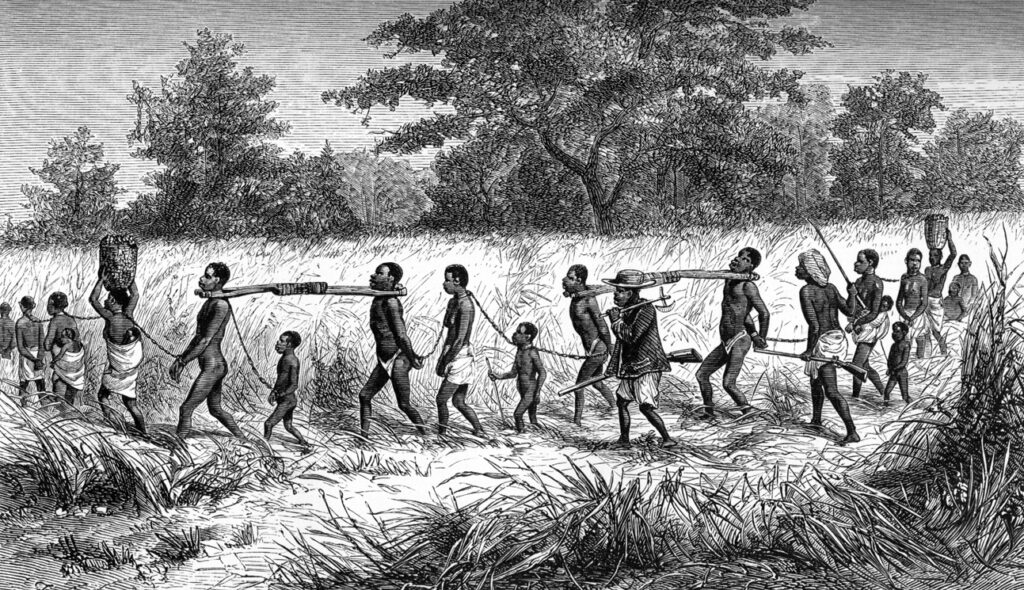
Built in moveable pieces, the prefabricated iron river boat Ma Robert was swiftly placed onto the Colonial Office ship Pearl and headed for Ceylon. They left on March 10, in Freetown gathered twelve Kru sailors to crew the river ship, and arrived at the Zambezi on May 14. Originally intended for both ships to establish bases along the river, the plan proved to be entirely unworkable for boats past the Cahora Bassa rapids, a sequence of cataracts and rapids Livingstone had neglected to investigate on his former trips. Pearl offloaded her provisions on an island some forty miles (64 km) upstream. Ma Robert then had to make numerous slow trips across shoals. Though both sides welcomed the expedition as friends, the riverbanks were a conflict zone with Portuguese troops and their captives fighting the Chikunda slave-hunters of Matakenya (Mariano).
missionary work in Africa Stuck at Shupanga, the specialists failed to advance as expected and there were arguments. David Livingstone | Hero Of Faith Thomas Baines, the artist, was let off from the trip. Others on the journey investigated Lake Nyasa in a four-oared gig and became the first to reach it. Pioneer, a new wooden paddle survey vessel supplied by the Colonial Office in 1861, carried the Universities’ Mission to Central Africa (UMCA) commanded by Bishop Charles MacKenzie up the Shire river to establish a new mission.
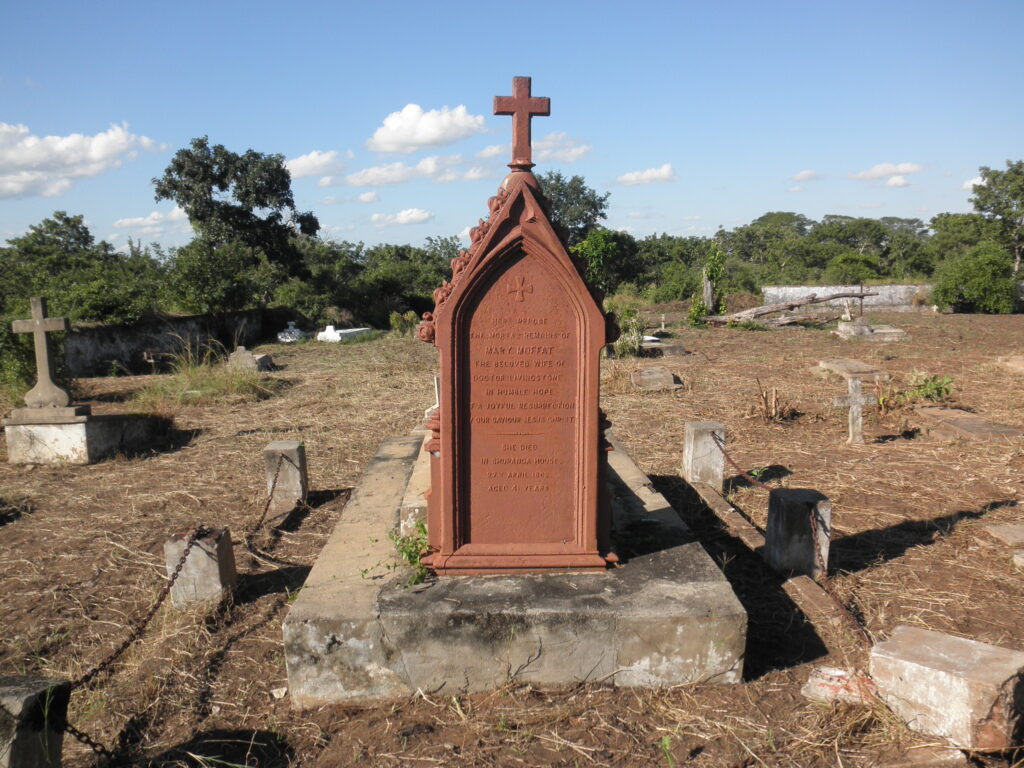
Livingstone obtained money for a replacement river ship, Lady Nyasa, particularly built to cruise Lake Nyasa. Against his wishes, it was sent out in pieces with a mission party comprising Mary Livingstone and arrived in 1862. Following the discovery of the bishop’s death, the Pioneer suffered more delays in arriving down to meet them. Mary Livingstone died from malaria on April 27, 1862.
Livingstone brought Pioneer along the coast and explored the Ruvuma River; John Kirk, the doctor, stated “I can come to no other conclusion than that Dr Livingstone is out of his mind and a most dangerous leader”.
Pioneer paid (in cloth) their “Mazaro men,” who left and engaged replacements, when they returned to Shupanga in December 1862. David Livingstone missionary They set off on January 10, 1863 carrying Lady Nyasa and headed up the Shire river via scenes of devastation as Mariano’s Chikunda slave-hunts caused starvation and they regularly had to clean the paddle wheels of dead bodies left floating downstream. While explorations proceeded, they arrived at Chibisa’s and the Murchison falls in April and started demolishing Lady Nyasa and creating a road to convey its portions past the falls.
Following government directive for expedition recall, he brought the ships downriver in 1864. Many publications of the period blamed the Zambezi Expedition for failing, and Livingstone had tremendous trouble gathering money to travel further across Africa. Scientists assigned to work under Livingstone, John Kirk, Charles Meller, and Richard Thornton, gave scientific institutions in the United Kingdom vast collections of botanical, ecological, geological, and anthropological material.
David Livingstone missionary Death
Livingstone died on 1 May 1873 at the age of 60 in Chief Chitambo’s village at Chipundu, southeast of Lake Bangweulu, in present-day Zambia, from malaria and internal bleeding due to dysentery. Led by his loyal attendants Chuma and Susi, his expedition arranged funeral ceremonies. They removed his heart and buried it under a tree near the spot where he died, which has been identified variously as a mvula tree or a baobab tree but is more likely to be an mpundu tree, as baobabs are found at lower altitudes and in more arid regions. That site, now known as the Livingstone Memorial, lists his date of death as 4 May, the date reported (and carved into the tree’s trunk) by Chuma and Susi; but most sources consider 1 May—the date of Livingstone’s final journal entry—as the correct one. The expedition led by Chuma and Susi then carried the rest of his remains, together with his last journal and belongings, on a journey that took 63 days to the coastal town of Bagamoyo, a distance exceeding 1,000 miles (1,600 km).David Livingstone missionary The caravan encountered the expedition of English explorer Verney Lovett Cameron, who continued his march and reached Ujiji in February 1874, where he found and sent to England Livingstone’s papers. Seventy-nine followers completed the journey, the men were paid their due wages, and Livingstone’s remains were returned by ship to Britain for burial. In London, his body lay in repose at No.1 Savile Row, then the headquarters of the Royal Geographical Society, prior to interment at Westminster Abbey.
Conclusion
David Livingstone was not merely an explorer; he was an individual of steadfast faith, profound compassion, and unyielding determination. His life’s objective was motivated by a commitment to exalt God, disseminate the Gospel to unengaged populations, and provide hope in a suffering continent. missionary work in Africa Despite immense adversity, peril, and sacrifice, he stayed steadfast in his vocation.
His legacy persists in motivating believers globally to live audaciously for Christ, serve altruistically, and pursue divine purpose with valor. David Livingstone epitomized the essence of a hero of faith, and his narrative compels us to transcend comfort and convenience to dedicate ourselves to a cause greater than our own selves.David Livingstone | Hero Of Faith missionary work in Africa
One Response