Introduction to Digital Marketing
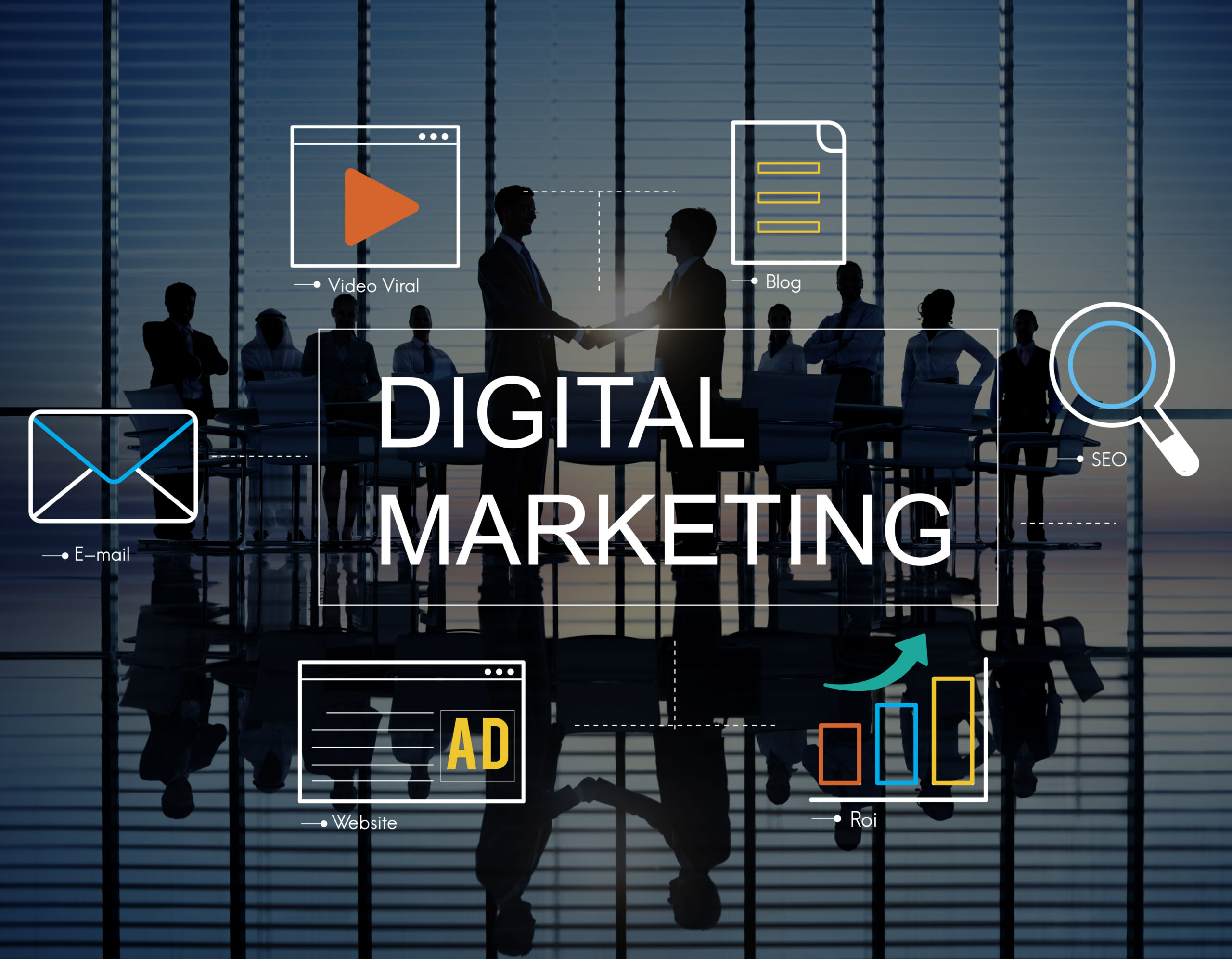
Digital Marketing: Strategies, Types, and Benefits. In today’s fast-paced, technology-driven world, businesses no longer rely solely on traditional advertising methods to reach their target audiences. Digital marketing has emerged as a revolutionary approach, enabling brands to connect with consumers through digital channels such as social media, search engines, email, websites, and mobile applications. It is no longer just an option—it has become a necessity for businesses of all sizes seeking growth, engagement, and measurable results.
At its core, digital marketing involves promoting products or services through digital technologies. Unlike traditional marketing, which often depends on billboards, print advertisements, or TV commercials, digital marketing harnesses the power of the internet to reach audiences more precisely, interactively, and cost-effectively. The digital landscape enables businesses to target specific demographics, monitor campaign performance in real time, and optimize strategies based on analytics. Benefits for Business This level of precision is difficult to achieve with traditional marketing methods.
One of the most significant advantages of digital marketing is its ability to create personalized experiences. By utilizing tools such as customer data analysis and behavioral tracking, businesses can gain insights into their audience’s preferences, interests, and purchasing habits. For example, an e-commerce store can recommend products based on a customer’s browsing history, while a service provider can deliver targeted email campaigns based on user engagement. This personalized approach not only increases the likelihood of conversions but also fosters long-term customer loyalty.
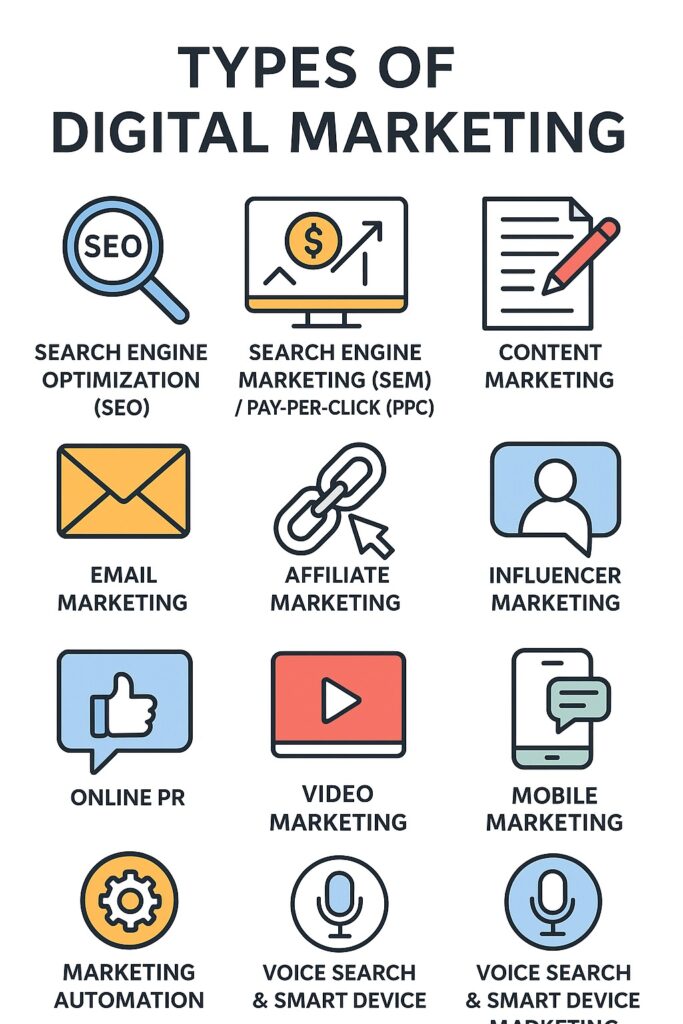
Digital marketing encompasses a broad range of strategies and techniques, each designed to achieve specific objectives. Search Engine Optimization (SEO) helps a business’s website rank higher on search engines like Google, driving organic traffic. Pay-Per-Click (PPC) advertising enables companies to bid for prominent ad placements, ensuring visibility to potential customers. Social media marketing utilizes platforms such as Facebook, Instagram, LinkedIn, and Twitter to engage audiences, build brand awareness, and foster community interaction. Content marketing focuses on delivering valuable, informative, and entertaining content to attract and retain customers. Benefits for Business Email marketing remains a powerful tool for nurturing leads and maintaining ongoing communication with clients.
Another critical aspect of digital marketing is its measurability. Unlike traditional marketing, where gauging success can be challenging, digital marketing provides businesses with detailed insights into campaign performance. Metrics such as website traffic, click-through rates, conversion rates, and engagement levels allow marketers to evaluate what works and what needs improvement. This data-driven approach enables businesses to make informed decisions, reduce wasteful spending, and maximize return on investment (ROI).
The rise of mobile technology has significantly accelerated the growth of digital marketing. With billions of people accessing the internet via smartphones, mobile-friendly strategies—such as responsive websites, app-based marketing, and location-based promotions—have become essential. Additionally, video marketing, influencer collaborations, and interactive content are gaining popularity, as they provide more engaging ways to connect with audiences.
In conclusion, digital marketing is transforming the way businesses operate by providing unprecedented opportunities to reach, engage, and convert customers. Its combination of precise targeting, personalized communication, cost efficiency, and measurable outcomes makes it an indispensable tool for modern businesses. Whether a small startup or a large enterprise, leveraging digital marketing strategies can significantly enhance brand visibility, drive growth, and foster meaningful connections with customers in today’s digital-first world. One of the greatest advantages of digital marketing is its ability to create personalized experiences for consumers. By leveraging advanced analytics and tracking tools, businesses can gain deep insights into their audience’s interests, preferences, and behaviors. For instance, an online store can recommend products based on a customer’s browsing history, while an email campaign can be customized according to a subscriber’s previous interactions. Benefits for Business This level of personalization enhances engagement, builds trust, and ultimately increases conversion rates.
Digital marketing is made up of several key strategies, each designed to achieve specific goals:
Search Engine Optimization (SEO)
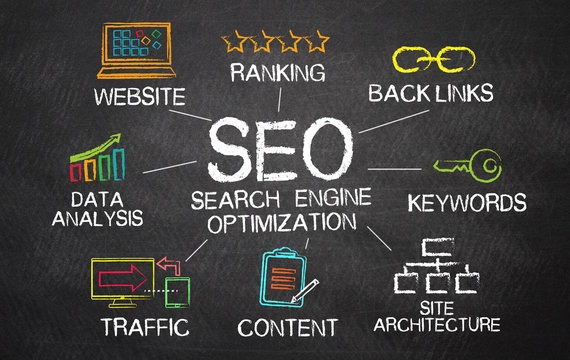
Search Engine Optimization (SEO) is the process of enhancing a Benefits for Business website’s visibility on search engines such as Google, Bing, and Yahoo. The primary goal of SEO is to attract organic (non-paid) traffic by ensuring that a website ranks higher in search engine results pages (SERPs) for relevant queries. Increased visibility often leads to greater website traffic, improved brand awareness, and higher potential for conversions.
SEO involves three key components: on-page SEO, off-page SEO, and technical SEO. On-page SEO focuses on optimizing content and HTML elements on a webpage, such as using relevant keywords, meta tags, headings, and high-quality content that aligns with user intent. Off-page SEO emphasizes building authority and trust through backlinks, social signals, and online mentions. Technical SEO addresses website infrastructure, including site speed, mobile-friendliness, secure connections (HTTPS), crawlability, and structured data, all of which help search engines index pages effectively. Keyword research is fundamental to SEO, as it helps identify what users are searching for and allows for the creation of tailored content. User experience (UX) is equally important because search engines prioritize websites that load quickly, are easy to navigate, and offer valuable content.
SEO is an ongoing process because search engine algorithms are constantly evolving. Strategies must adapt to changes in ranking factors, competition, and user behavior. When executed properly, SEO can provide long-term benefits, often outperforming paid advertising in both cost-effectiveness and credibility.
In essence, SEO bridges the gap between what people are searching for and the content a website offers, making it a crucial digital marketing tool for businesses, bloggers, and online platforms seeking to increase visibility and engagement.
Search Engine Marketing (SEM) / Pay-Per-Click (PPC)
Purpose:
Search Engine Marketing (SEM) is a digital advertising strategy aimed at increasing a business’s visibility on search engine results pages (SERPs). The primary goal of SEM is to attract potential customers who are actively searching for products or services, providing businesses with an immediate opportunity to generate traffic, leads, and sales. Benefits for Business: Unlike organic search methods, which rely on search engine optimization (SEO) and may take months to yield results, SEM offers instant exposure. Businesses of all sizes use SEM to enhance brand awareness, target specific audiences, and gain a competitive edge in their industry. By investing in SEM, companies can appear prominently in search results when potential customers are most likely to make purchasing decisions.
How It Works:
Search Engine Marketing (SEM) commonly employs the Pay-Per-Click (PPC) model, where businesses pay only when a user clicks on their ad. The process begins with selecting relevant keywords that potential customers might use when searching for products or services. Advertisers then create ads and place bids on these keywords. Search engines, such as Google or Bing, use a combination of bid amounts and ad quality to determine which ads appear in the search results. When a user searches for a keyword, the search engine displays the most relevant ads at the top or bottom of the results page. Advertisers can further refine their campaigns by targeting specific locations, devices, languages, demographics, and even the time of day when ads appear. This precise targeting ensures that ads are shown to users who are most likely to convert into customers. Digital Marketing: Strategies
Example:
Consider an online sneaker store aiming to increase sales. The store can create a Google Ads campaign targeting the keyword sneakers online. When someone searches for this phrase, the store’s ad may appear at the top of the search results. If the user clicks the ad, the store pays a fee for that click. Benefits for Business: This approach ensures the store reaches potential customers who are actively interested in purchasing sneakers. Since the store only pays for actual clicks, it maximizes the efficiency of its advertising budget while increasing the likelihood of generating a sale.
Advantages:
SEM/PPC offers several significant advantages. It provides immediate visibility on search engines, allowing businesses to attract traffic quickly. The targeting options are highly precise, helping ads reach audiences based on location, device, demographics, and time. Campaign performance is easily measurable, with metrics such as clicks, impressions, conversions, and return on investment (ROI) available in real time. Benefits for Business This allows marketers to continuously optimize campaigns for better results.
Challenges:
Despite its advantages, PPC advertising presents several challenges. Highly competitive keywords can be costly, and without proper management, businesses risk wasting their advertising budgets. Campaigns require continuous monitoring, testing, and optimization to remain effective. Poorly designed ads or targeting can lead to low engagement and minimal return on investment (ROI).Digital Marketing: Strategies
In conclusion, SEM/PPC is a powerful and effective digital marketing strategy. When executed strategically, it helps businesses reach the right audience, drive relevant traffic, increase sales, and build brand awareness. Benefits for Business By combining careful planning, precise targeting, and continuous optimization, SEM/PPC can deliver measurable and cost-effective results in today’s competitive online marketplace.
Content Marketing
Introduction:
Content marketing is a strategic approach centered on creating, publishing, and distributing valuable, relevant, and consistent content to attract and retain a clearly defined audience. Unlike traditional advertising, which directly promotes a product or service, content marketing aims to provide useful information that educates, entertains, or solves problems for the audience. Benefits for Business The ultimate goal is to build trust, enhance brand awareness, and foster customer loyalty, ultimately leading to increased sales over time.
Purpose:
The primary purpose of content marketing is to connect with potential and existing customers by providing meaningful content that addresses their needs and interests. By offering informative and engaging material, businesses can position themselves as industry experts and trusted advisors. Content marketing also helps improve brand recognition, generate leads, nurture prospects, and enhance customer engagement. It is a long-term strategy focused on building relationships rather than driving immediate sales.
How It Works:
Content marketing involves planning, creating, and distributing content tailored to a specific target audience. The first step is to identify the audience and understand their needs, preferences, and pain points. Next, businesses develop content that addresses these issues in various formats, such as blog posts, articles, videos, infographics, podcasts, social media posts, newsletters, or e-books. Once the content is ready, it is published on appropriate channels where the audience is most likely to engage with it, including company websites, social media platforms, and email campaigns. Benefits for Business The effectiveness of content marketing is measured using metrics such as website traffic, social shares, engagement rates, and lead conversions.
Example:
A company selling organic skincare products might create a blog series about skincare routines, natural ingredients, and tips for maintaining healthy skin. They could also produce short videos demonstrating how to use their products or infographics explaining the benefits of natural ingredients. By consistently providing valuable content, the brand attracts people interested in skincare, builds trust, and encourages them to purchase products over time.
Advantages:
Content marketing offers numerous advantages. It helps establish a brand as an authority in its industry, builds trust with the audience, and improves customer engagement. It also supports other digital marketing efforts, such as search engine optimization (SEO), social media marketing, and email marketing. High-quality content can generate organic traffic, nurture leads, and provide long-term benefits as the content continues to attract and educate new customers over time.
Challenges:
Despite its benefits, content marketing requires consistent effort and resources. Creating high-quality, engaging content can be time-consuming and demands creativity, research, and strategic planning. Measuring its direct impact on sales can also be challenging, as results often manifest over the long term.
Conclusion:
Content marketing is a powerful strategy for building lasting relationships with customers. By creating valuable, relevant, and consistent content, businesses can enhance brand visibility, build trust, and drive customer loyalty. With a well-planned content marketing strategy, companies can achieve sustainable growth and maintain a competitive edge in today’s digital landscape.
Social Media Marketing (SMM)
Purpose:
Social Media Marketing (SMM) is a digital marketing strategy designed to promote products, services, or brands through social media platforms. Its primary goal is not only to increase sales but also to build a strong online community and foster meaningful relationships with the audience. By leveraging social media, businesses can engage directly with potential customers, strengthen brand loyalty, and raise awareness in a highly interactive environment. Benefits for Business Unlike traditional advertising, social media marketing allows for real-time feedback, enabling businesses to respond instantly to customer queries, concerns, or comments.
How It Works:
Social media marketing (SMM) operates through various strategies, including organic posts, paid advertisements, influencer collaborations, and community engagement. Organic posts involve sharing content such as images, videos, stories, or blog links to engage followers naturally. Paid social media ads enable businesses to target specific demographics, interests, locations, or behaviors, ensuring that content reaches the most relevant audience. Collaborations with influencers allow brands to leverage the influencer’s credibility and follower base to promote products effectively. Additionally, community engagement involves interacting with users through comments, messages, polls, and live sessions, fostering trust and loyalty while creating a sense of belonging around the brand.
Platforms:
Different social media platforms serve unique purposes depending on the target audience. Facebook is ideal for broad reach and offers detailed advertising options. Instagram emphasizes visual content and influencer marketing. Twitter is effective for real-time updates, trending conversations, and customer interaction. LinkedIn is tailored for professional networking, B2B marketing, and thought leadership content. TikTok, with its short-form video format, has become increasingly popular for reaching younger audiences and creating viral marketing campaigns. Benefits for Business: Successful social media marketing (SMM) strategies often combine multiple platforms to maximize reach and engagement.
Example:
A clothing brand launching a new collection can run an Instagram campaign to generate buzz. The campaign might include high-quality posts showcasing outfits, Instagram Stories featuring behind-the-scenes footage, collaborations with fashion influencers, and interactive polls to engage followers. Paid Instagram ads targeting specific age groups, locations, and interests can further enhance visibility. Benefits for Business :By monitoring likes, shares, comments, and website clicks generated by the campaign, the brand can measure its impact and optimize future efforts.
Advantages:
SMM provides businesses with increased brand visibility, higher engagement rates, and the ability to reach highly targeted audiences. It also allows for real-time feedback and performance tracking, enabling continuous optimization of campaigns.
Challenges:
Despite its advantages, SMM can be time-consuming and requires consistent content creation. Negative feedback or viral controversies can also affect brand reputation, requiring careful monitoring and quick responses.
Conclusion:
Social Media Marketing is an essential tool for modern businesses. By strategically using organic content, paid ads, influencer collaborations, and community engagement across platforms like Facebook, Instagram, Twitter, LinkedIn, and TikTok, businesses can promote products, build loyal communities, and drive sustainable growth in today’s competitive digital landscape.
Email Marketing
Introduction:
Email marketing is a digital marketing strategy that involves sending targeted messages directly to potential or existing customers via email. It is one of the most effective and cost-efficient methods for businesses to communicate with their audience, build relationships, and drive engagement. Benefits for Business Unlike social media or display advertising, email marketing enables businesses to deliver personalized messages directly to an individual’s inbox, making it a highly personal and direct form of marketing.
Purpose:
The primary purpose of email marketing is to maintain communication with potential and existing customers, build brand loyalty, and encourage sales or conversions. Businesses use email marketing to share updates, offer promotions, provide valuable information, and nurture long-term relationships. By sending relevant and timely content, companies can engage their audience, increase customer retention, and drive repeat purchases. Additionally, email marketing enables audience segmentation to deliver messages tailored to different customer needs, resulting in higher engagement and return on investment (ROI).
How It Works:
Email marketing operates by creating targeted campaigns that reach subscribers who have opted in to receive communications. The process begins with building an email list of potential and existing customers. Businesses then design email content, which may include newsletters, promotional offers, product updates, personalized recommendations, or event invitations. Advanced email marketing tools enable personalization, automation, and segmentation. For example, users can receive emails tailored to their past purchases, browsing behavior, or engagement levels. Benefits for Business After sending the emails, marketers track performance using metrics such as open rates, click-through rates, conversions, and unsubscribe rates to optimize future campaigns.
Example:
A retail store launching a new product line might send an email to its subscriber list offering a 20% discount coupon for early purchases. The email could include attractive visuals of the products, a clear call-to-action button, and links to the online store. Subscribers who receive the email are more likely to visit the store and make a purchase, while the business can track how many users clicked the link and redeemed the coupon. Such campaigns demonstrate the effectiveness of email marketing in driving both engagement and sales.
Advantages:
Email marketing offers numerous benefits. It provides direct access to the audience, allowing businesses to deliver personalized and relevant content. It is cost-effective compared to other marketing channels and provides measurable results through analytics. Email campaigns can be automated, saving time while maintaining consistent communication. Furthermore, email marketing supports customer retention by keeping the brand top-of-mind and encouraging repeat purchases.
Challenges:
Despite its advantages, email marketing faces challenges such as avoiding spam filters, maintaining a clean and engaged email list, and creating content that stands out in crowded inboxes. Poorly executed campaigns can lead to low engagement or high unsubscribe rates, making it essential to continuously optimize email strategies.
Conclusion:
Email marketing remains a powerful tool for businesses aiming to engage their audience, promote products or services, and build long-term customer relationships. By delivering personalized, timely, and valuable content directly to subscribers’ inboxes, businesses can increase conversions, enhance brand loyalty, and achieve measurable marketing success. With careful planning, segmentation, and performance tracking, email marketing continues to be a cost-effective and impactful strategy in today’s digital landscape.
Affiliate Marketing
Purpose:
Affiliate marketing is a performance-based strategy in which businesses collaborate with third-party individuals or organizations, known as affiliates, to promote their products or services. The primary objective is to increase sales, generate leads, or drive traffic without directly investing in traditional advertising. Affiliates receive commissions or incentives for every successful action they help generate. This approach benefits both parties: businesses expand their reach and sales potential, while affiliates earn revenue by promoting products they believe in. Digital Marketing: Strategies.
How It Works:
Affiliate marketing operates through a system of tracking, promotion, and rewards. Here is a step-by-step breakdown of the process:
Affiliate Program Enrollment: Businesses create an affiliate program and define the terms, including commission rates, payment schedules, and the types of actions that will be rewarded (such as sales, clicks, or leads). Affiliates then sign up and receive unique tracking links or codes Digital Marketing: Strategies.
Promotion by Affiliates: Affiliates promote the business’s products or services to their audiences through various channels, such as blogs, social media platforms, email newsletters, YouTube videos, or podcasts. The content is typically educational or informative, designed to seamlessly integrate the product and encourage potential customers to take action.
Tracking Conversions: Every affiliate link contains a tracking code to monitor traffic and conversions. This ensures that sales, leads, or clicks generated by the affiliate are accurately attributed to them.
Earning Commissions: When a user clicks an affiliate link and completes the designated action—such as making a purchase or signing up for a service—the affiliate earns a predetermined commission. Payments can be structured as a fixed fee per action, a percentage of the sale, or recurring revenue for subscription-based products.
Benefits of Affiliate Marketing
Cost-Effective: Businesses pay only for results, minimizing wasted advertising expenses. Digital Marketing: Strategies.
Wide Reach: Affiliates can connect with audiences that businesses might not reach through traditional marketing methods.
Performance-Based: Because affiliates earn commissions based on actual results, they are motivated to promote products effectively.
Low Risk: Minimal upfront costs for the business make this an attractive marketing strategy.
Types of Affiliate Marketing
Unattached Affiliate Marketing occurs when the affiliate has no direct connection to the product. Promotion relies solely on online advertisements, pay-per-click (PPC) campaigns, or other traffic sources.
Related Affiliate Marketing involves promoting products that align with the affiliate’s niche, even if the affiliate has not personally used them. This strategy depends on maintaining audience trust and ensuring product relevance.
Involved Affiliate Marketing: The affiliate has personally used or experienced the product and can offer genuine recommendations. This approach often achieves the highest conversion rates due to its authenticity and credibility Digital Marketing: Strategies.
Example:
A blogger specializing in tech reviews writes an article about a new project management software tool. They include a referral link within the article. Readers interested in improving their workflow click the link and purchase the software. The blogger then earns a commission, while the software company gains a new customer. This mutually beneficial system generates revenue for affiliates while driving sales for businesses.
Conclusion:
Affiliate marketing has evolved into a multi-billion-dollar industry because it aligns the incentives of both businesses and affiliates. It enables businesses to expand their reach cost-effectively while offering individuals and organizations opportunities to monetize their content, expertise, or networks. With clear tracking systems, transparent commission structures, and innovative promotional strategies, affiliate marketing remains one of the most effective methods for generating revenue in the digital age. Digital Marketing: Strategies.
Influencer Marketing
Influencer Marketing: Leveraging Trust to Drive Brand Growth
In today’s digital-first world, traditional advertising methods are losing their effectiveness as consumers become increasingly skeptical of overt marketing tactics. Instead, audiences turn to trusted voices—relatable individuals who share authentic experiences and opinions. This shift in consumer behavior has led to the rise of influencer marketing, a powerful strategy in which brands collaborate with social media personalities, bloggers, or content creators to promote their products and services. By leveraging an influencer’s reach, credibility, and relationship with their audience, brands can drive awareness, engagement, and sales in a manner that feels more personal and organic.
Purpose of Influencer Marketing
The primary purpose of influencer marketing is to build brand credibility and expand reach through authentic advocacy. Influencers serve as intermediaries between a brand and its potential customers, leveraging their personal platforms to communicate product benefits in a genuine and relatable way. Unlike traditional advertisements, influencer endorsements often feel like trusted recommendations from a friend, helping brands overcome skepticism and ad fatigue. Digital Marketing: Strategies.
Another key purpose is targeted reach. Influencers typically cater to niche audiences—ranging from fitness enthusiasts and beauty aficionados to tech geeks and eco-conscious consumers. This enables brands to tailor their messages to highly specific demographics without wasting resources on irrelevant audiences. Additionally, influencer partnerships can enhance a brand’s social presence, generate user-generated content (UGC), and improve search visibility through mentions, hashtags, and backlinks.
How Influencer Marketing Works
Influencer marketing operates through strategic partnerships between brands and content creators who align with the brand’s values, image, and target audience. The process typically involves several stages:
Identifying the Right Influencer: Brands begin by researching influencers who share their values and appeal to their target audience. Digital Marketing: Strategies These influencers can range from macro-influencers—celebrities or public figures with millions of followers—to micro- and nano-influencers, everyday individuals with smaller but highly engaged communities. While macro-influencers offer extensive reach, micro-influencers often provide higher engagement and greater authenticity.
Establishing Collaboration Terms: Once a suitable influencer is identified, brands negotiate the terms of collaboration—such as payment, posting schedules, content types (photos, videos, blogs, stories, or live sessions), and usage rights. Some collaborations are paid, while others may involve free products, affiliate commissions, or long-term brand ambassadorships.
Content Creation and Approval: Influencers create content that seamlessly integrates the brand’s message into their regular posts. Authenticity is crucial—overly scripted or sales-oriented content can damage both the influencer’s and the brand’s credibility. Brands often review the content for compliance and accuracy before it is published. Digital Marketing: Strategies.
Promotion and Engagement: Once published, the influencer shares the content with their followers, encouraging interaction through likes, comments, shares, or purchase links. The brand can amplify the post through paid advertisements or cross-promotions to extend its reach.
Performance Tracking: To measure success, brands monitor key performance indicators (KPIs) such as engagement rate, website traffic, conversion rate, and return on investment (ROI). Data analytics tools and affiliate tracking links help identify which influencers generate the best results.
Example: Fitness Influencers Promoting Health Products
A prime example of influencer marketing in action can be observed in the fitness industry. For instance, a fitness influencer on Instagram might promote a new protein supplement by showcasing their daily workout routine and explaining how the product supports their nutritional goals. They may also include a discount code or a link in their bio, encouraging followers to try the product themselves.
Because followers view the influencer as a credible source of fitness advice, they are more likely to trust the recommendations and make a purchase. This not only boosts sales but also enhances brand visibility among health-conscious audiences. Similar strategies are employed across various sectors—from beauty brands collaborating with makeup artists to tech companies partnering with YouTube reviewers.
The Power of Authenticity Digital Marketing: Strategies
At its heart, influencer marketing thrives on authenticity. Consumers can easily detect insincere endorsements, so successful campaigns are built on genuine relationships where influencers truly believe in the product. When done right, influencer marketing humanizes brands, builds long-term loyalty, and transforms satisfied customers into brand advocates.
Conclusion
Influencer marketing has evolved from a niche trend into a cornerstone of modern digital strategy. By partnering with trusted voices that resonate with their target audiences, brands can cut through the noise, tell compelling stories, and inspire genuine action. Whether it’s a fitness influencer promoting a protein supplement or a lifestyle blogger reviewing eco-friendly skincare, the essence of influencer marketing remains the same: trust, authenticity, and connection drive consumer engagement and ultimately lead to brand success.
Online PR (Public Relations)
Introduction
Online Public Relations (Online PR) is a digital strategy aimed at building and maintaining a positive reputation for a brand, individual, or organization across the internet. Unlike traditional PR, which relies on print media, television, or radio, online PR utilizes digital platforms such as blogs, news websites, social media, and online review sites to engage audiences and influence public perception Digital Marketing: Strategies.
The primary goal of online PR is to enhance brand awareness and credibility. In a world where consumers rely on the internet for information, reviews, and recommendations, maintaining a strong online presence is more important than ever. A well-executed online PR campaign can boost a brand’s visibility, attract media attention, and shape how it is perceived by potential customers and stakeholders.
Key activities in online PR include writing and distributing press releases, securing media coverage on digital platforms, collaborating with bloggers and influencers, managing online reviews, and responding to brand mentions in real time. These efforts help build a trustworthy brand image, generate buzz, and support broader digital marketing strategies such as SEO (Search Engine Optimization) by earning high-quality backlinks and increasing web traffic.
For example, a tech startup might use online PR to get featured in popular industry blogs, thereby gaining exposure and credibility with its target audience. Digital Marketing: Strategies Whether you are launching a new product, managing a crisis, or simply aiming to strengthen your brand image, online PR is a powerful tool for engaging with the public in today’s digital-first world.
How It Works: Tools and Tactics of Online PR
Online PR uses a variety of techniques and channels to share information and engage with audiences. Here are some common methods Digital Marketing: Strategies:
- Press Releases:
A press release is an official statement shared with digital media outlets and online journalists. It’s used to announce newsworthy events such as product launches, partnerships, or company milestones. Well-crafted press releases can gain attention from popular websites, increasing the brand’s visibility. - Media Coverage:
Getting featured in online publications, news websites, and industry blogs helps a brand gain credibility. Media coverage from trusted sources acts as third-party validation, which can influence customer decisions more effectively than direct advertising. - Blogger and Influencer Outreach:
Online PR often involves building relationships with bloggers, influencers, and content creators. These individuals have loyal audiences, and their endorsement of a brand or product can significantly boost awareness and trust. - Managing Online Reviews:
Reviews on platforms like Google, Yelp, or Trustpilot influence potential customers. Online PR includes strategies to encourage positive reviews and professionally respond to negative ones, ensuring the brand maintains a strong reputation. - Monitoring Brand Mentions:
Tools like Google Alerts, Mention, or Brand24 help businesses track where and how they are being mentioned online. This monitoring allows for real-time engagement and reputation management, especially in crisis situations. - Digital Press Kits:
Brands may create online press kits containing company background, executive bios, high-resolution logos, product photos, and contact details. These make it easy for journalists and bloggers to cover the brand accurately and professionally. - Search Engine Optimization (SEO):
Many online PR strategies contribute to SEO by creating backlinks from reputable sites. This not only drives traffic but also improves search engine rankings, making it easier for people to find the brand online.
Example: A Startup Featured in Tech Blogs to Enhance Credibility
Imagine a tech startup that has developed a new productivity app aimed at remote teams. To generate buzz, the company’s marketing team writes a compelling press release highlighting the app’s unique features and early success with beta users. They distribute the release through online PR platforms like PR Newswire and reach out to well-known tech bloggers and online journalists. A few influential blogs pick up the story, writing positive reviews and featuring the app in their “Top Tools for Remote Teams” articles.
Simultaneously, the startup’s PR team monitors social media and responds to user feedback, while encouraging satisfied customers to leave reviews on platforms like Capterra and G2. As a result, the company gains credibility, earns valuable backlinks, and sees a noticeable spike in website traffic and app downloads.
Video Marketing
Introduction
A digital tactic known as “video marketing” makes use of video material to advertise, clarify, and close deals on goods and services. Video has emerged as one of the best ways for marketers to interact with their audiences as mobile usage keeps growing and online attention spans get shorter.
Video uses music, imagery, and storytelling to convey ideas fast and effectively, unlike text or still photos. Videos, whether they are 15-second TikTok clips, YouTube product demos, or Instagram live streams, let companies highlight their products, gain customers’ trust, and encourage action. The versatility of video marketing is what makes it so effective. Brands can utilize video to show off the features of their products, share client endorsements, provide instructional, or provide an inside peek at their business. Websites, social media sites, email campaigns, and paid advertising channels can all share these movies.
Video is also a powerful tool for enhancing SEO, lengthening user engagement on websites, and raising conversion rates in today’s content-driven world. Video is a crucial component of any digital marketing plan since platforms like YouTube, Facebook, Instagram, LinkedIn, and TikTok give it priority in their algorithms.
Video marketing can vary from short-form social videos to long-form instructional content, depending on your audience and message. Making connections is more important than merely producing stuff. When done correctly, video marketing converts spectators into devoted.
Purpose:
A strong digital tactic, video marketing makes use of video material to advertise a company, good, or service. By presenting information in an aesthetically appealing and understandable manner, it seeks to engage audiences, foster trust, and increase conversions.
Quick, interesting, and educational material is what today’s consumers want, and video satisfies all three requirements. A brief product demonstration, an inside peek at a business, or a client endorsement—video helps brands establish a human connection with their audience. Educating potential consumers, fostering relationships, and influencing their decisions to buy are all goals of video marketing Benefits for Business.
With people’s attention spans getting shorter and their use of mobile devices growing, video has become an essential component of corporate communication. It can highlight traits, clarify difficult subjects, answer common questions, or tell a story — all in a format that is more likely to be remembered than text alone.
How It Works:
Video marketing works across multiple formats and platforms. Below are the key methods businesses use to deliver impactful video content:
1. YouTube Ads:
YouTube is the world’s second-largest search engine, making it an ideal place for video advertising. Businesses can run short video ads before or during other videos, targeting specific audiences based on interests, demographics, and search behavior. These ads are great for brand awareness and can drive significant traffic when used strategically.
2. Explainer Videos:
These are short videos that explain a product, service, or concept in a simple and engaging way. Explainer videos are typically animated or live-action and are placed on landing pages, homepages, or social media to help potential customers understand how something works. They are especially useful for SaaS products, startups, and complex offerings.
3. Live Streams:
Live video has grown in popularity thanks to platforms like Facebook Live, YouTube Live, Instagram Live, and LinkedIn Live. Live streaming allows brands to interact with audiences in real-time Benefits for Business whether it’s a product launch, Q&A session, event coverage, or behind-the-scenes tour. It fosters engagement and creates a sense of authenticity and connection.
4. Short-Form Video Content:
Short videos (typically under 60 seconds) are ideal for capturing attention on social platforms like TikTok, Instagram Reels, YouTube Shorts, and Facebook Stories. These formats are perfect for teasers, tips, quick demos, trends, or humorous content. Because of their viral potential, short-form videos can significantly boost brand reach and engagement.
5. Educational and Tutorial Content:
Videos that teach audiences how to use a product or solve a problem are valuable tools in video marketing. Not only do they provide value, but they also position the brand as an expert in its field. These videos are ideal for YouTube channels, customer support, or onboarding resources.
6. Testimonials and Case Studies:
Videos featuring real customers talking about their experience can build trust and social proof. Case study videos showing before-and-after results or customer success stories help potential buyers visualize the benefits of a product or service.
Example:
Suppose a skincare product is introduced by a cosmetics company. The marketing team produces a series of brief video demonstrations that demonstrate how to use the product, highlight its advantages, and display actual outcomes in order to generate buzz and inform people.
These videos are posted to TikTok and YouTube Shorts, which are well-known for short-form, viral content. Influencers apply the product, offer brief advice, and display before-and-after photos in the videos. Viewers are taken to a link in the bio or description for additional information or to make a purchase after seeing the product in use right away.
The videos soon become popular since they are brief, eye-catching, and educational. Organic reach is increased as viewers start tagging friends, sharing, and commenting. Additionally, the brand boosts some of the videos through paid TikTok ads to reach targeted demographics Benefits for Business.
As a result, the product gains visibility, drives traffic to the website, and increases sales — all powered by an effective video marketing campaign tailored to modern consumer habits.
Conclusion
Video marketing is no longer optional — it’s essential. With the ability to inform, entertain, and convert viewers, video is one of the most effective tools in a digital marketer’s toolkit. By using a mix of video types across platforms, businesses can reach their audience more effectively, build trust, and drive measurable results.
Mobile Marketing
Introduction
People use their smartphones and tablets more than any other gadget in today’s fast-paced digital environment. Mobile devices are now an essential part of daily life, used for everything from social media surfing and email checking to online buying and video viewing. The way businesses interact with their audience has changed as a result of this change in consumer behavior, and mobile marketing has emerged as one of the most effective digital methods.
Purpose :
Reaching customers directly through their mobile devices is the main goal of mobile marketing. Mobile marketing, as opposed to traditional marketing methods, allows companies to interact with clients in real time, from any location. Brands may send highly customized messages that grab attention and encourage interaction thanks to this immediacy.
Conversions, brand awareness, and client convenience are the three main goals of mobile marketing. Marketers create brief, eye-catching, and screen-size-optimized ads because mobile users are frequently on the go. Every component, Benefits for Business whether it’s an in-app message, promotional text, or mobile-friendly ad, is designed to offer a flawless user experience.
In the end, the objective is to create enduring relationships through meaningful and strategically planned encounters, not only to advertise a good or service.
How it works:
Mobile marketing encompasses several strategies, each tailored to reach users through different mobile channels. Some of the most effective methods include:
- SMS Marketing
SMS (Short Message Service) marketing involves sending promotional or informational text messages directly to customers’ phones. It’s one of the oldest yet most effective forms of mobile marketing, boasting open rates as high as 98%. Businesses use SMS marketing to share discount codes, event reminders, and limited-time offers. Because text messages are usually read within minutes of being received, this method is ideal for time-sensitive campaigns like flash sales or urgent announcements. - App-Based Notifications
With millions of people using mobile apps daily, app-based notifications have become a key tool for businesses. These include push notifications and in-app messages that alert users to new content, offers, or updates. For instance, a retail app might send a push notification about an ongoing sale, while a food delivery app could remind users of their favorite meal with a special discount. These notifications encourage user engagement and keep the brand top-of-mind, even when customers aren’t actively using the app. - Mobile Ads
Mobile advertising includes banner ads, video ads, and interactive ads displayed within mobile websites or applications. These ads are typically optimized for small screens and designed to be visually appealing without interrupting the user experience. Mobile ads can also leverage location-based targeting, showing relevant promotions to users based on their current or past locations. For example, a coffee shop could display an ad offering a discount to nearby customers during morning hours. - Location-Based Marketing
This advanced form of mobile marketing uses GPS data to deliver messages and offers based on where a user is located. Businesses can target customers within a specific geographic radius — for instance, sending a notification when someone enters a shopping mall or passes by a particular store. This real-time targeting makes the marketing message more relevant and increases the likelihood of conversion.
Example:
Consider the introduction of a 24-hour flash sale by a fashion retailer. The brand notifies customers who have installed its mobile app via push notification in order to generate immediate traffic. It could say something like, “🔥 Flash Sale Alert! Save 50% on everything today only! To shop before it’s gone, tap , Benefits for Business.
Users are taken directly to the app’s sale section when they tap the notification, which speeds up and streamlines the buying experience. Customers value timely and special deals, so this strategy not only boosts sales but also strengthens brand loyalty.
Conclusion
Mobile marketing is becoming necessary rather than optional. Businesses that modify their tactics in response to consumers’ continued heavy reliance on mobile devices stand to earn a substantial competitive edge. Using app-based alerts, SMS marketing, and mobile ads, brands can connect with audiences in real time, deliver personalized experiences, and inspire action.
By meeting users where they already are – on their smartphones – mobile marketing turns every device into a powerful tool for engagement, conversion, and long-term brand growth.
Marketing Automation
Introduction
The secret to success in the dynamic realm of digital marketing is efficiency and customisation. Today’s businesses manage numerous marketing channels, deal with enormous volumes of client data, and work to deliver the appropriate message at the right moment. All of these procedures take a lot of time and are prone to mistakes when done by hand. Marketing automation is a potent tactic that helps businesses save time, streamline their marketing initiatives, and produce reliable outcomes.
Purpose:
Automating monotonous marketing tasks and workflows is the main goal of marketing automation, freeing up teams to concentrate on strategy, innovation, and fostering closer bonds with clients. Marketers may arrange and carry out campaigns automatically with the use of specialist software, guaranteeing that the appropriate message reaches the correct audience at the right time.
Marketing automation essentially fills the gap between personalization and efficiency. Without requiring physical interaction, it allows companies to concurrently provide thousands of clients with personalized experiences. In addition to increasing productivity, this also fosters lead nurturing, improves customer engagement, and eventually increases conversions and revenues.
Consistency across marketing channels is also guaranteed by automation. Automated solutions help maintain a consistent brand voice across multiple channels, including paid advertising, social media, and email touchpoints, efficiently. Benefits for Business.
How it works:
Marketing automation relies on sophisticated software platforms like HubSpot, Mailchimp, Salesforce Marketing Cloud, Marketo, and others. These tools integrate various marketing activities, from email campaigns and lead nurturing to analytics and customer relationship management (CRM). Here’s how the process generally works:
- Data Collection and Segmentation
The first step in marketing automation involves gathering customer data from multiple sources — such as website forms, social media interactions, and purchase histories. The software then organizes and segments this data based on behavior, demographics, or engagement levels. For example, users who download an eBook can be grouped as “interested leads,” while frequent buyers can be labeled as “loyal customers.” - Automated Workflows and Email Sequences
Once audiences are segmented, marketers create automated workflows — sequences of actions that trigger based on user behavior. For instance, when someone subscribes to a newsletter, the system automatically sends a welcome email. A few days later, it might follow up with a product recommendation or a discount offer. These email sequences nurture leads by keeping them engaged until they’re ready to make a purchase. - Lead Scoring
Marketing automation tools often include lead scoring systems, which assign numerical values to prospects based on their engagement. Opening emails, clicking links, or visiting specific web pages increases a lead’s score. When a lead reaches a certain threshold, it signals the sales team that the prospect is “hot” and ready for direct follow-up. This process helps prioritize efforts and ensures that sales representatives focus on the most promising opportunities. - Campaign Tracking and Analytics
One of the most valuable aspects of marketing automation is performance tracking. These platforms provide detailed analytics on campaign performance — open rates, click-through rates, conversions, and customer lifetime value. Marketers can use these insights to optimize future campaigns, refine audience targeting, and improve return on investment (ROI). - Multi-Channel Integration
Marketing automation isn’t limited to email. It can integrate with various channels — such as SMS marketing, social media scheduling, and digital advertising. This allows businesses to maintain a consistent presence across platforms and deliver cohesive messages throughout the customer journey.
Example:
Consider a person enrolling in a fitness program online. The marketing automation system sends them a welcome email thanking them for signing up as soon as they do. A few days later, they get another email with training advice for beginners and then one with special deals on fitness equipment. Every email is issued automatically according to preset guidelines and customized to their interests.
This keeps the customer interested and facilitates a seamless onboarding process without requiring any human work from the marketing team. Benefits for Business The user gains confidence in the brand over time, increasing the likelihood that they will become a devoted client.
Conclusion:
Marketing automation has completely changed how companies interact with their customers. Marketers may save time, cut down on mistakes, and concentrate on high-value activities that spur expansion by automating repetitive processes like email campaigns, lead scoring, and data tracking. Businesses can make data-driven choices, effectively nurture prospects, and personalize communications with the help of tools like HubSpot, Mailchimp, and Salesforce.
Marketing automation has become essential in a world where consumers need consistent, timely, and relevant interactions. By making sure that every touchpoint matters in fostering closer ties with customers and attaining long-term success, it empowers organizations to work smarter, not harder.
Voice Search & Smart Device Marketing
Introduction
The way people look for information and engage with brands is changing significantly as a result of the ongoing advancements in technology. Voice search and smart device marketing are two of the biggest advancements in the last few years. More consumers are using their voices rather than keyboards to search for information, make purchases, and communicate with brands as a result of the growing popularity of virtual assistants like Microsoft’s Cortana, Apple’s Siri, Google Assistant, and Amazon’s Alexa. This change is changing digital marketing tactics and opening up new avenues for companies to engage with clients in more accessible and conversational ways. Benefits for Business .
Purpose:
Optimizing brand visibility and content for voice-based interactions is the main goal of voice search and smart device marketing. The way people type questions into search bars is the main emphasis of traditional search engine optimization, or SEO. On the other hand, voice searches are usually more conversational, longer, and frequently consist of full queries. For instance, users may ask, “Hey Google, where’s the best place to order pizza near me?” rather than, “best pizza restaurant NYC.”
Businesses can place themselves at the top of voice search results by modifying their marketing strategy to fit these natural language searches. In a world that is becoming more and more voice-driven, this optimization guarantees that companies stay relevant and reachable. Additionally, smart device marketing enables businesses to communicate with consumers through a variety of connected technologies, such as wearable technology, TVs, smart speakers.
How it works:
Voice search and smart device marketing rely on artificial intelligence (AI) and natural language processing (NLP) to understand and interpret spoken queries. Benefits for Business: Smart assistants like Alexa or Google Assistant then deliver answers from the most relevant online sources. To take advantage of this technology, marketers focus on several key strategies:
- Optimizing Content for Conversational Queries
Voice searches often mimic real-life conversations, meaning they tend to be longer and more specific than typed searches. To optimize for these, businesses must use natural, question-based keywords. For instance, instead of targeting “Italian restaurant,” marketers should include phrases like “Where can I find the best Italian restaurant near me?” or “What are the top-rated Italian restaurants open now?”
Creating content that answers these specific questions increases the chances of being featured in voice search results or “featured snippets,” which are often read aloud by smart assistants. - Leveraging Local SEO
A large percentage of voice searches are location-based. Users frequently ask for nearby services, such as “Find a coffee shop near me” or “What’s the closest car wash?” To capture these searches, businesses must ensure that their Google Business Profile is complete and accurate. This includes updating contact details, operating hours, and customer reviews. Using local keywords like neighborhood names or landmarks further enhances discoverability. - Structuring Data for Smart Devices
Search engines rely on structured data (schema markup) to understand a website’s content. By implementing this code, businesses help smart assistants quickly extract relevant information — such as business hours, product details, or pricing. This makes it easier for voice assistants to read out accurate answers to user queries. - Creating Voice-Friendly Content
Since voice search users expect quick, concise responses, brands should prioritize clear and direct content. FAQ pages, blogs with question-based headings, and conversational writing styles perform exceptionally well for voice optimization. The goal is to provide information that a smart assistant can easily summarize and present verbally. Benefits for Business. - Advertising on Smart Platforms
Many brands are also leveraging smart device advertising, such as audio ads on platforms like Spotify or Amazon Alexa. These ads are tailored for voice-enabled environments, allowing users to engage hands-free — for example, by saying, “Alexa, add this product to my cart.”
Example:
Think of a neighborhood pizzeria that wants to draw in local clients. The company makes sure that terms like “best pizza near me” and “pizza delivery open now” are included on its website in order to optimize for voice search. Additionally, it keeps a current Google Business listing with its address, phone number, and business hours.
The algorithm now identifies the restaurant’s optimal information and suggests it as one of the top options when a user asks their smart assistant, “Find pizza near me.” Both foot traffic and online orders can be greatly increased with this straightforward yet efficient optimization. Benefits for Business
Conclusion
Smart device marketing and voice search are transforming how companies interact with their customers. Maintaining digital visibility requires optimizing for conversational questions and smart assistant interactions, which are becoming more and more common as voice-enabled technology becomes more widely used.
Brands should make sure their audiences actually hear them by optimizing content for natural language, improving local SEO, and organizing data for voice-friendly responses. Marketing’s future depends on comprehending how people talk, not simply how they type, and using that knowledge to provide quicker, more intelligent, and more individualized consumer experiences.
Voice search is transforming not only how consumers locate information but also how brands interact, connect, and expand in the digital era.
Why Digital Marketing Is Important
Introduction:
Digital marketing is becoming a crucial component of every successful business plan in the increasingly connected world of today. Your clients are spending more time online, whether you own a tiny local business or a large multinational corporation. They are watching movies, exploring websites, and shopping for goods and services. With data-driven, quantifiable, adaptable, and economical techniques, digital marketing enables businesses to meet clients where they are.
These are the main justifications for the significance of digital marketing in today’s corporate environment. Benefits for Business
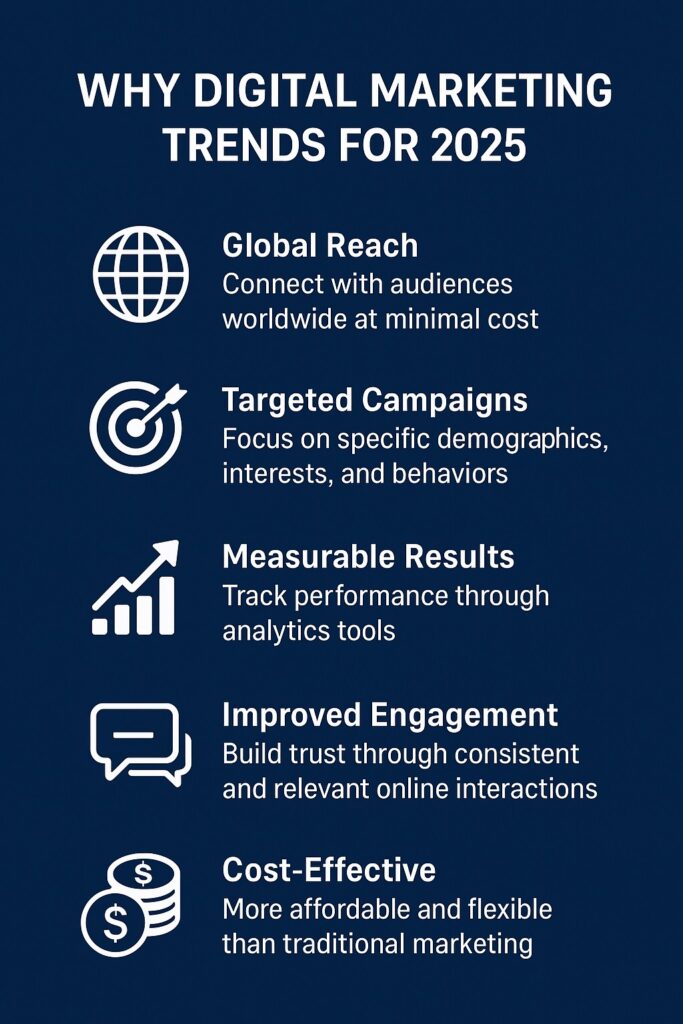
Global Reach:
The worldwide reach of internet marketing is one of its greatest benefits. Conventional marketing techniques, such television advertising or print ads, are frequently expensive and restricted by region. Digital marketing, on the other hand, enables companies to reach audiences anywhere in the world with a few clicks.
For example, a tiny Indian firm can use social media, search engines, and e-commerce platforms to market its goods to consumers in the US, Europe, or Africa. Due to its worldwide accessibility, small and medium-sized enterprises can now compete with larger firms on an even playing field.
To make sure that their information is seen by the proper people, marketers may also customize campaigns to target particular nations or even languages using internet platforms like Facebook, Instagram, and Google Ads. Whether it is starting a global campaign without the huge expenses associated with traditional advertising.
Targeted Campaigns:
The capacity to design focused campaigns is another potent feature of digital marketing. Digital marketing enables precise targeting based on demographics, interests, location, behaviors, and even online activity, in contrast to traditional marketing, which disseminates messages to a wide and frequently irrelevant audience. Benefits for Business
For instance, companies can target specific audiences using tools like Facebook Ads Manager or Google Ads, such as fitness enthusiasts between the ages of 18 and 25 or tech industry professionals. HubSpot and Mailchimp are two examples of email marketing solutions that allow organizations to segment their subscriber lists and send personalized messages to each group.
This degree of targeting guarantees effective use of marketing funds. Rather than speculating about potential customers, businesses can connect with those who are most inclined to interact, purchase, or take action. As a result, targeted campaigns not only improve conversion rates but also foster stronger customer relationships by delivering relevant and personalized experiences.
Measurable Results:
It’s frequently challenging to gauge an advertisement’s true effectiveness in traditional marketing. However, one of the main benefits of digital marketing is that it produces quantifiable outcomes. Companies can use analytics platforms like Google Analytics, Meta Insights, or HubSpot Dashboard to monitor every facet of their campaigns. Benefits for Business
Real-time information on KPIs, including website traffic, click-through rates, conversion rates, user engagement, and return on investment (ROI), is provided via these technologies. Digital Marketing: Strategies business that runs an internet advertisement, for instance, may see precisely how many people saw it, clicked on it, and then completed a purchase.
Marketers can make well-informed decisions and continuously optimize campaigns with this data-driven approach. Changes can be made immediately if something isn’t working, such as altering keywords, enhancing images, or focusing on a certain audience targeting. The ability to measure, analyze, and adapt is what makes digital marketing so powerful and efficient compared to traditional approaches.
Improved Engagement:
By facilitating two-way communication between audiences and brands, digital marketing also improves customer engagement. Businesses can engage with consumers through community forums, email newsletters, live chats, and comments on social media rather than just promoting ads.
Brands can share content, answer queries, and take part in discussions on social media sites including Facebook, Instagram, LinkedIn, and TikTok. Customers value brands that listen to them and interact with them directly, so this ongoing interaction fosters trust and loyalty.
Additionally, digital marketing enables companies to provide timely and customized content. A clothing company might, for instance, send a consumer an email with product recommendations based on their browsing or previous purchases. Digital Marketing: Strategies. In addition to increasing consumer happiness, this type of customized communication raises the possibility of repeat business. In the end, increased involvement results in stronger relationships, positive brand perception, and long-term customer retention.
Cost-Effective Marketing:
The affordability of digital marketing is arguably one of its most alluring features. Digital platforms provide far more versatile and variable possibilities than traditional channels like print, TV, or radio advertising.
Small businesses can start with very little money and still receive a lot of exposure and interaction. For instance, they can run social media advertisements for a few dollars a day. Furthermore, at a fraction of the price of conventional campaigns, long-term benefits can be obtained with techniques like email marketing and content marketing (blogs, videos, and SEO).
Additionally, performance-based expenditure and budget control are made possible by digital marketing. Limits, pauses, and increased investment in high-performing advertisements are all options available to marketers. This adaptability guarantees the highest possible return on each investment.
Additionally, natural tactics like search engine optimization (SEO), social media engagement, and content creation can generate sustained traffic and brand awareness over time — further improving cost efficiency.
Conclusion:
The capacity to access, engage, and convert consumers online is crucial for marketing success in a world that is becoming more and more digital. All of that is provided by digital marketing: high engagement, quantifiable results, focused campaigns, worldwide reach, and cost effectiveness. It gives companies of all sizes the ability to compete in the global market and create enduring bonds with their clients. Digital Marketing: Strategies
By utilizing technology, creativity, and data, digital marketing is more than simply a fad; it is the cornerstone of contemporary company expansion. Businesses who adopt it now will have a clear edge in the future connected world.
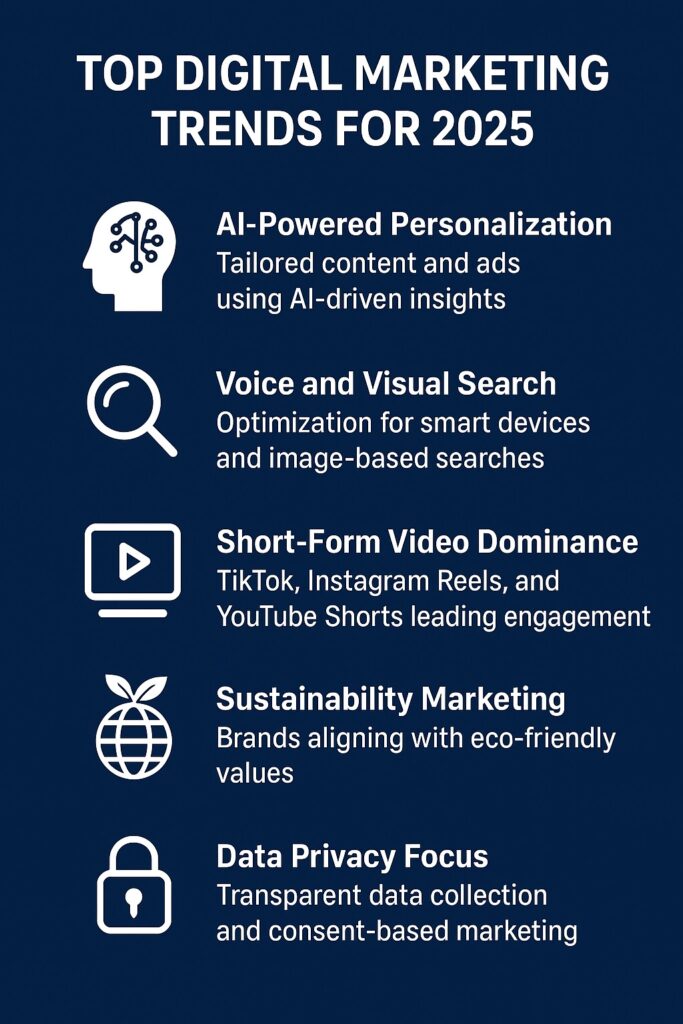
Top Digital Marketing Trends for 2025
Introduction:
The field of digital marketing is changing at an astonishing rate as a result of changing customer habits and technological advancements. In 2025, what was successful in 2023 or 2024 could not be as effective. Marketers need to remain ahead of the curve by modifying their approaches to suit emerging platforms, technology, and consumer demands.
These are 2025’s top digital marketing trends that will influence how companies interact with, convert, and keep consumers.
AI-Powered Personalization
Artificial intelligence (AI) is currently the cornerstone of contemporary marketing techniques, having transcended its status as a trendy term. By providing highly personalized experiences to each user, AI-powered customization is expected to take over digital marketing in 2025.
Massive volumes of data, such as surfing habits, past purchases, and interaction patterns, are analyzed by AI algorithms to forecast customer preferences before they ever become aware of them. This makes it possible for marketers to send personalized emails, recommendations, and adverts that seem pertinent and intimate.
For instance, streaming services like Netflix and Spotify already utilize AI algorithms to propose content that users are likely to appreciate, and e-commerce websites can use AI to promote things based on previous purchases. Digital Marketing: Strategies. In a similar vein, AI chatbots now offer round-the-clock, human-like customer service, increasing user engagement and happiness. In 2025, personalization will go beyond names in emails — it will be about real-time adaptation, where content and offers dynamically change based on user interactions. Brands that master this level of personalization will see higher conversion rates and stronger customer loyalty.
Voice and Visual Search
Voice search is becoming a common method of information access as smart gadgets and AI assistants like Alexa, Siri, and Google Assistant become more widely used. At the same time, tools like Google Lens and Pinterest Lens are helping to increase the use of visual search, which uses images rather than words to find things.
Businesses that wish to remain visible in 2025 will need to optimize for both voice and visual search. Instead of entering terms into search bars, consumers are now saying things like, “Find a coffee shop near me,” or “Show me shoes like this.”
In order to optimize their content for natural, spoken language rather than just short keywords, marketers must concentrate on conversational SEO. Businesses should also use high-quality data and organized data images so that search engines can easily interpret and display their products during visual searches.
Voice and visual search optimization will play a critical role in increasing discoverability, driving traffic, and enhancing the customer experience in an increasingly voice- and image-driven digital environment.
Short-Form Video Dominance
Short-form video is still without a doubt the most popular type of content in 2025. Users now want short, interesting, and amusing films that provide value in a matter of seconds thanks to platforms like TikTok, Instagram Reels, and YouTube Shorts.
Short-form video is ideal for consumers with shorter attention spans than ever before. These platforms are being used by brands for influencer partnerships, product demos, storytelling, and entertainment.
2025 will see a shift toward originality and authenticity. Real, relatable content has a higher chance of engaging viewers than well-produced, business-style videos. Businesses that employ comedy, behind-the-scenes videos, or user-generated material are becoming increasingly popular.
Even tiny businesses are now able to create brief, high-quality videos thanks to AI tools that make video editing quicker and easier. The message is clear: if your brand isn’t leveraging short-form video, it’s missing out on one of the most effective ways to engage today’s audiences.
Sustainability Marketing
In an era of increasing data breaches and privacy concerns, data transparency is becoming a cornerstone of trust between brands and consumers. As new privacy laws and data protection regulations continue to emerge globally, 2025 will see businesses placing even greater emphasis on consent-based marketing.
Consumers now demand to know how their data is collected, stored, and used. Companies must adopt clear, ethical, and transparent data practices — such as giving users control over their preferences and ensuring compliance with privacy regulations like GDPR and CCPA. Digital Marketing: Strategies
Marketers will also rely more on first-party data — information collected directly from customers — instead of third-party cookies, which are being phased out. This approach not only improves privacy compliance but also enhances personalization accuracy.
Brands that prioritize privacy and security will gain a competitive edge by building trust and credibility with their audiences.
Conclusion:
The digital marketing landscape in 2025 is defined by innovation, personalization, and transparency. As AI transforms how content is delivered, and voice and visual search reshape discovery, marketers must stay agile and forward-thinking. Short-form video will continue to dominate engagement, while sustainability and data privacy will define brand trust and reputation.
Success in 2025 will depend on a brand’s ability to blend technology with authenticity using data responsibly, communicating honestly, and delivering value in every digital interaction. Businesses that embrace these trends early will not only stay relevant but thrive in the evolving digital future. Digital marketing is no longer optional Digital Marketing: Strategies it’s essential for success in 2025 and beyond. By embracing SEO, social media, content creation, and emerging trends, businesses can build stronger connections, increase visibility, and achieve sustainable growth online.